
Harvest Data Inaccuracies and Corn Test Weight
 October 23, 2020
Harvest Data Inaccuracies
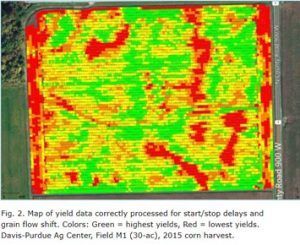
Yield data is a tool that can help us evaluate our farms and any new practices we might be testing. It is important to make sure that we are collecting accurate data. Harvest data can be plagued by many inaccuracies, though many can be cleaned up on the backend. These inaccuracies can include things like improper harvesting height, sudden speed changes, poor GPS signal, improper header swath width, etc. While it is common to have issues in the field, it is important to note that many of these issues can be corrected. Things like incorrect swath width or improper hybrid labeling can be corrected on the back end to reflect what was actually done. Issues like sudden speed changes or unintended data points from driving with the head down should just be deleted out of the data set. Back end data processing is important, but it will not make or break how we utilize and analyze the data. Almost all harvest data will still need processing after it has been collected. Data that needs adjusting can commonly include the dry bushel moisture value, dry bushel weight, adjusting swath widths, and grain flow lag. Some monitors allow for adjusting these settings in the display and do not require exporting to mapping software. When properly processed, patterns and issues are often easier to spot compared to improperly processed yield data. Cleaning up data can be frustrating if you have no experience with it. If you are unsure of what you are doing, outsource the task. If you have any questions about cleaning yield data or working with it give us a call.
Corn Test Weight
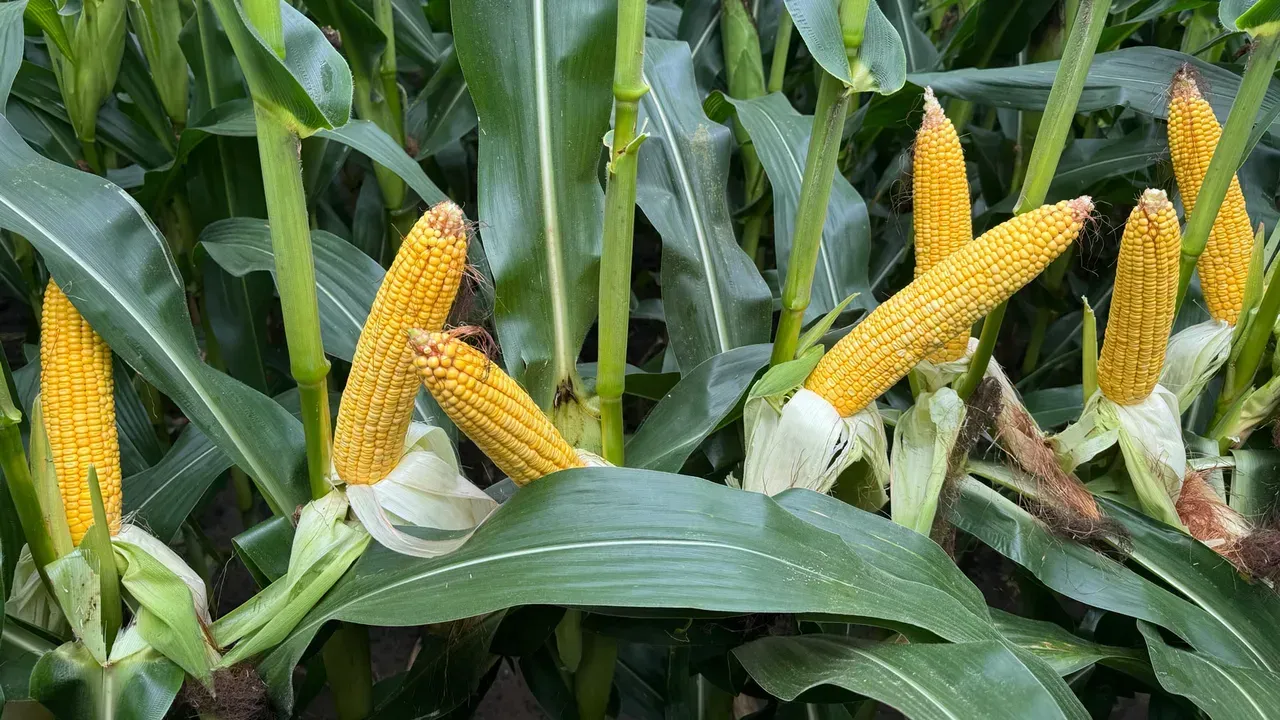
Test weight is often a confusing and misunderstood topic. Test weight is a volumetric measure of grain. Higher test weight grain will hold more dry weight in the same unit of area as lower test weigh grain. You can put more pounds of high test weight grain in bin than you can low test weight grain. Test weight is influence by hybrid but can also be influenced by conditions associated with the season and harvest. One common incorrect assumption that high test weight corn equals high-yielding corn. In fact, it is possible for severely stressed areas to have higher test weight than less stressed areas. That said, a high corn test weight can result in a grower being paid for more bushels since corn is sold as a 56 lb bushel, regardless of the volume or test weight. Test weight is often used to indicate the storability of corn. Corn with a high-test weight will generally store much better than low-test weight corn. This often due to low test weight grains being related to chaffy and more easily broken. Corn moisture and test weight will often go in the inverse of one another. With high moisture, we will most likely have lower test weight corn. Test weight can be influenced by ear rots, hybrids, moisture, and stresses during grain fill.
Resources
• Bob Nielsen Articles
o https://www.agry.purdue.edu/ext/corn/news/timeless/CleaningYieldData.html
o https://www.agry.purdue.edu/ext/corn/news/timeless/AutoHybridErrors.html
o https://www.agry.purdue.edu/ext/corn/news/timeless/AutoHeaderWidth.html
• Corn Test Weight
o https://www.agry.purdue.edu/ext/corn/news/timeless/TestWeight.html
o https://fyi.extension.wisc.edu/grain/files/2009/12/CornTW09.pdf
The post Harvest Data Inaccuracies and Corn Test Weight appeared first on Greene Crop Consulting.